Module 3 of 8
Hazard classes and the 10 pictograms
WHMIS sorts every hazardous product into classes, and every class into categories. The pictogram on the label is a shortcut for that classification. Learn the system first and the pictograms stop being symbols to memorize and become sentences you can read.
Groups, classes, categories
- Two hazard groups. Physical hazards come from the product's physical or chemical properties: it burns, explodes, reacts, corrodes metal, is under pressure. Health hazards come from what the product does to a body: poisons, burns skin, causes cancer, triggers asthma.
- Classes group products with the same type of hazard: "flammable liquids", "acute toxicity", "carcinogenicity".
- Categories rank severity inside a class. Category 1 is always the most severe; 2, 3 and 4 are progressively less so. Some classes use sub-categories (1A, 1B, 1C) or "types" (A to G) instead, and the same rule applies: the earlier the letter or number, the greater the hazard.
A product can belong to several classes at once. Acetone is a flammable liquid (physical) and also an eye irritant and a narcotic-effect STOT hazard (health). The label will carry every pictogram its classification requires.
The physical hazard classes
Flammable gases · aerosols · oxidizing gases · gases under pressure · flammable liquids · flammable solids · self-reactive substances and mixtures · pyrophoric liquids · pyrophoric solids · self-heating substances and mixtures · substances and mixtures which, in contact with water, emit flammable gases · oxidizing liquids · oxidizing solids · organic peroxides · corrosive to metals · chemicals under pressure (added 2025) · desensitized explosives (added 2025) · combustible dusts · simple asphyxiants · physical hazards not otherwise classified.
The last three are Canadian additions that do not exist in the base GHS. Explosives as a class are not part of WHMIS because they are regulated separately under the Explosives Act.
The health hazard classes
Acute toxicity (oral, dermal, inhalation) · skin corrosion / irritation · serious eye damage / eye irritation · respiratory or skin sensitization · germ cell mutagenicity · carcinogenicity · reproductive toxicity · specific target organ toxicity, single exposure (STOT-SE) · specific target organ toxicity, repeated exposure (STOT-RE) · aspiration hazard · biohazardous infectious materials (Canadian addition) · health hazards not otherwise classified.
WHMIS also recognizes an environmental hazard group in the GHS, but Canada has not adopted it as a classification requirement. You may still see the environment pictogram on labels from suppliers who include it; it is permitted, not required.
The ten pictograms
Nine pictograms use the GHS frame: a red diamond with a black symbol on white. The tenth, biohazardous infectious materials, keeps the round black-bordered symbol carried over from WHMIS 1988. Click or tap each one in your mind and attach the meaning.
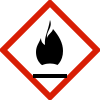
Flame — fire hazard
Flammable gases, aerosols, liquids and solids; self-reactive, pyrophoric and self-heating products; products that emit flammable gas with water; organic peroxides; desensitized explosives. Keep away from heat, sparks and open flame; ground containers when pouring.
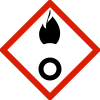
Flame over circle — oxidizer
Oxidizing gases, liquids and solids. Supplies oxygen, so fires start more easily, burn hotter and spread faster. Store apart from flammables and combustibles; keep away from heat.

Exploding bomb — reactive / explosion hazard
The most unstable self-reactive substances and organic peroxides (types A and B). May explode or react violently with heat, shock or friction. Read the SDS before handling; store the minimum quantity, isolated.
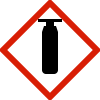
Gas cylinder — gas under pressure
Compressed, liquefied, refrigerated liquefied and dissolved gases, and chemicals under pressure. Containers may rupture or explode if heated; a leak can displace oxygen or release a large volume of a toxic or flammable gas fast. Secure cylinders upright; protect valves.
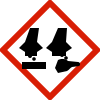
Corrosion
Corrosive to metals, skin corrosion, serious eye damage. Causes burns and permanent eye injury; can eat through steel and aluminum. Eye and face protection, chemical-resistant gloves, eyewash within reach.
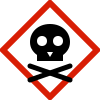
Skull and crossbones — acute toxicity
Acute toxicity categories 1 to 3: can cause serious illness or death after a single short exposure by mouth, skin or inhalation, sometimes in very small amounts. Strict handling controls, PPE, no eating or drinking nearby.
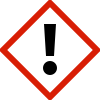
Exclamation mark — less severe health hazards
Acute toxicity category 4, skin and eye irritation, skin sensitization, and single-exposure effects such as drowsiness, dizziness or respiratory irritation. Still hazardous: ventilate, use gloves and eye protection, wash after use.

Health hazard — serious long-term effects
Carcinogens, mutagens, reproductive toxins, respiratory sensitizers, organ toxicity from single or repeated exposure, and aspiration hazard. Harm may not be felt at the time. Minimize exposure through engineering controls first, then PPE.
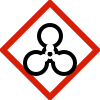
Biohazardous infectious materials
Organisms or their toxins that cause disease in people or animals: cultures, specimens, contaminated sharps. Canadian-only class. Follow laboratory and health-care biosafety procedures.

Environment — aquatic toxicity
Harmful to fish and other aquatic life. Not a required WHMIS class in Canada but may appear on labels. Prevent release to drains, soil and waterways; dispose of as the SDS directs.
When there is no pictogram
Some categories are hazardous enough to require a label but not a pictogram: flammable liquids category 4, combustible dusts, simple asphyxiants and the "not otherwise classified" classes, for example. The label still carries a signal word, hazard statements and precautions. Never treat "no pictogram" as "no hazard".
Reading the whole label, not just the symbol
The pictogram tells you the type of hazard; the hazard statement and category tell you how severe it is. "Flame" on a category 1 flammable liquid such as ether and "flame" on a category 3 liquid such as kerosene demand different precautions. Module 4 shows you where to find that detail.
Knowledge check
Within a single hazard class, which category is the most hazardous?
Knowledge check
A label shows the health hazard pictogram (the silhouette with a starburst). What kind of effect should you expect?
Knowledge check
Which pictogram is unique to Canada and not part of the GHS set?
Key points
- Two groups (physical, health), many classes, numbered categories; category 1 is the most severe.
- Ten pictograms: flame, flame over circle, exploding bomb, gas cylinder, corrosion, skull and crossbones, exclamation mark, health hazard, biohazard, environment.
- Canadian additions: combustible dusts, simple asphyxiants, biohazardous infectious materials, chemicals under pressure and desensitized explosives (2025).
- No pictogram does not mean no hazard; read the signal word and hazard statements.