Module 4 of 8
Supplier and workplace labels
The label is the first thing between you and a hazardous product. It is designed to be read in ten seconds, standing at the shelf, before the cap comes off. There are two kinds you'll see every day, plus a special case for labs.
Supplier labels
The supplier attaches this label before the product is sold. It must be in English and French, legible, and durable enough to survive normal handling. Six elements are required:
- Product identifier: the brand, chemical, common or trade name, exactly as it appears on the SDS so you can match the two.
- Initial supplier identifier: the name, address and telephone number of the Canadian manufacturer or importer.
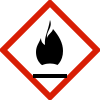
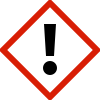
- Pictogram(s) required by the classification.
- Signal word: either Danger (more severe) or Warning (less severe). Only one appears, and some low-hazard categories have none.
- Hazard statement(s): standardized phrases describing the hazard: "Highly flammable liquid and vapour", "Causes severe skin burns and eye damage", "May cause cancer".
- Precautionary statement(s): standardized advice on prevention, response, storage and disposal: "Keep away from heat, sparks, open flames", "IF ON SKIN: wash with plenty of water", "Store locked up".
Supplemental information may be added where the rules require it (for example, the percentage of ingredients of unknown toxicity) and the pictograms, signal word and hazard statements must be grouped together on the label.
Highly flammable liquid and vapour. Causes skin irritation. May cause drowsiness or dizziness. ← hazard statements
Keep away from heat, sparks, open flames and hot surfaces. No smoking. Wear protective gloves and eye protection. Use only outdoors or in a well-ventilated area. IF ON SKIN: wash with plenty of water. Store in a well-ventilated place; keep cool. ← precautionary statements
Northline Chemicals Ltd., 100 Example Rd, Hamilton ON · 1-800-555-0100 ← initial supplier identifier
Workplace labels
Employers prepare a workplace label when a supplier label isn't there or isn't enough:
- a product is poured or transferred into another container (a spray bottle, a pail, a dip tank);
- a product is produced and used on site;
- a supplier label is lost, damaged or unreadable.
A workplace label needs only three things, and it can be in English alone, hand-written if legible:
- the product name (matching the SDS);
- safe handling precautions, which may be words or pictograms;
- a reference to the SDS (for example "See SDS").
The employer may add more, such as the signal word or pictograms, but is not required to.
When a workplace label is not needed
If you pour a product into a container and will use it all yourself during the same shift, you only need to mark the container with the product name. The moment the container is left unattended, used by someone else, or kept past the shift, it needs a full workplace label.
Other container markings
Products in piping systems, reaction vessels, tank cars and bulk shipments don't carry a normal label. The employer must identify the contents in another way (placards, colour codes, tags) and tell workers how to read them. Laboratory samples under 10 kg being shipped for analysis can carry a short lab label with the chemical name, the words "Hazardous Laboratory Sample" and an emergency number; the full SDS requirement is replaced by that contact.
Scenario
A hotel housekeeper fills a spray bottle with a concentrated disinfectant and leaves it on her cart for the week. The bottle has no label. A new co-worker, assuming it is glass cleaner, sprays a mirror in a closed bathroom and spends the afternoon coughing. A workplace label with the product name, a one-line precaution ("Use in ventilated area; avoid breathing mist") and "See SDS" would have taken thirty seconds and prevented it.
Your part
- Read the label before you use a product, every time. Suppliers reformulate, and the product in that container may not be the one you remember.
- Never use a product from an unlabelled or unreadable container. Report it to your supervisor so a workplace label can be made.
- Check that any container you fill carries a workplace label before it leaves your hands.
- If the label and the SDS disagree, stop and ask.
Knowledge check
Which of the following is NOT a required element of a supplier label?
Knowledge check
You pour solvent into a small can to clean parts and will finish it before lunch. What does the can need?
Knowledge check
Of the two signal words, which one indicates the more severe hazard?
Key points
- Supplier label: six required elements, English and French, attached before sale.
- Workplace label: product name, safe-handling precautions, reference to SDS. Required when decanting, producing on site, or replacing a damaged label.
- Signal words: Danger (more severe) or Warning (less severe).
- Read the label every time; never use an unlabelled product; report missing labels.